Professional Coffee Grinder Buyer's Guide: Burr vs Blade

Affiliate disclosure: Some links on this page are affiliate links. If you buy through them we earn a small commission at no extra cost to you. Recommendations are research-driven; we don't claim personal use of every product reviewed. Product prices and availability are accurate as of the date published and are subject to change. Always check Amazon for current pricing before purchasing. Learn more.
Quick Picks
KitchenAid BCG111ER Blade Coffee Grinder, 4 oz, Empire Red
KitchenAid brand reputation for quality kitchen appliances
Buy on AmazonBLACK+DECKER One Touch Coffee Grinder, 2/3 Cup Coffee Bean Capacity, Spice Grinder, One Touch Push-Button Control -150 Watts -Stainless Steel Blades
One-touch push-button control offers simple, convenient operation
Buy on AmazonBaratza Virtuoso+ Coffee Grinder ZCG587BLK, Black
Baratza is established brand with strong reputation for grinders
Buy on Amazon| Product | Price Range | Top Strength | Key Weakness | Buy |
|---|---|---|---|---|
| KitchenAid BCG111ER Blade Coffee Grinder, 4 oz, Empire Red best overall | KitchenAid brand reputation for quality kitchen appliances | Blade grinders produce inconsistent particle size distribution | Buy on Amazon | |
| BLACK+DECKER One Touch Coffee Grinder, 2/3 Cup Coffee Bean Capacity, Spice Grinder, One Touch Push-Button Control -150 Watts -Stainless Steel Blades also consider | One-touch push-button control offers simple, convenient operation | 2/3 cup capacity limits grinding volume per batch | Buy on Amazon | |
| Baratza Virtuoso+ Coffee Grinder ZCG587BLK, Black also consider | Baratza is established brand with strong reputation for grinders | Burr grinder type may require regular cleaning for optimal performance | Buy on Amazon |
Most grinders marketed as “professional” are neither. The label gets applied to anything with a dial and a hopper, which makes finding an actual workhorse, one that produces consistent, repeatable grinds across brew methods, harder than it should be. A quick look through the full range of Coffee Grinders makes the quality spread obvious.
The dividing line is burr geometry, not brand name. Blade grinders chop. Burr grinders cut. That distinction determines whether your extraction is even or a lottery, and no amount of technique closes the gap between them.
What to Look For in a Professional Coffee Grinder
Grind Consistency
This is the whole game. A grinder’s job is to produce particles of uniform size so that every gram of coffee extracts at the same rate. When particle size varies, some powder, some coarse chunks, you get simultaneous over-extraction and under-extraction in the same cup. The result tastes both bitter and sour at once, and no adjustment to brew time or water temperature fixes it reliably.
Burr grinders achieve consistency by passing beans through a fixed gap between two abrasive surfaces. The gap determines particle size; the geometry of the burrs determines how uniform that sizing is. Flat burrs and conical burrs behave differently at different settings, but both are categorically more consistent than any blade mechanism.
Burr Size and RPM
Larger burrs at lower RPM generate less friction heat and transfer less of it to the coffee. Heat during grinding accelerates the release of volatile aromatics, meaning some of what makes good coffee smell like good coffee leaves before the water ever touches it. For espresso, where extraction is intense and compressed, this matters more than for drip. For filter brewing, the difference is real but forgiving.
Most home-grade burr grinders run steel burrs in the 40-64mm range. At 40mm you’re at the low end of what produces genuinely reliable consistency; at 64mm you’re in territory where the machine starts earning “professional” without the quotation marks.
Grind Retention
Retention is the amount of ground coffee that stays inside the grinder, in the chute, the burr chamber, the exit path, rather than landing in your cup. For a dedicated drip or French press grinder used at a fixed setting, low retention matters less; the retained coffee purges with the next dose. For anyone dialling in espresso or working across multiple brew methods with frequent setting changes, high retention wastes the dose you actually measured and contaminates it with stale grounds from the last grind.
This matters more as coffee quality increases. If you’re buying specialty-grade beans at premium prices per bag, you’re throwing real money away with every retained gram. Single-dose grinders address this directly, the Niche Zero is the clearest recommendation I can make in its category, but even among hopper-fed grinders, retention varies considerably and is worth checking before purchase.
Step vs. Stepless Adjustment
Stepped grinders click between fixed settings. Stepless grinders allow continuous adjustment between any two points on the dial. Neither is universally better. Stepped grinders are faster to return to a known setting, which matters if you share the grinder or switch between brew methods on a schedule. Stepless grinders give you finer control for dialling in espresso, where a fraction of a turn can shift extraction meaningfully.
For most home users working with one or two brew methods, a well-calibrated stepped grinder is entirely sufficient. The idea that stepless is always superior comes from espresso-focused hobbyist culture, where small adjustments genuinely move the needle, but that precision is irrelevant if you’re grinding for a Chemex three times a week.
Build Quality and Longevity
A grinder is the appliance you use every single morning before your brain is fully operational. Build quality shows up not in unboxing impressions but in the second year of daily use: whether the hopper cracks, whether the adjustment collar develops play, whether the motor sounds different after 500 hours. Browsing the broader grinder landscape before you buy gives you a realistic picture of where each machine sits in the durability hierarchy.
Plastic-heavy construction is not automatically disqualifying at entry-level, but it is a signal. Where metal-bodied grinders save you money is in the replacement cycle, you’re less likely to be shopping again in two years.
Top Picks
KitchenAid BCG111ER Blade Coffee Grinder
The KitchenAid BCG111ER Blade Coffee Grinder is compact, recognizable, and competently built for what it is. KitchenAid’s brand reputation is earned in stand mixers and food processors; here it’s being applied to a product category where the mechanism itself is the limitation, not the manufacturer.
I used a blade grinder, different brand, same principle, for two weeks before understanding why my espresso was undrinkable. What a blade produces is not ground coffee in any controlled sense. It’s a combination of powder and coarse fragments, distributed by how long you hold the button and where the beans happened to land in the chamber. Uneven extraction is not a risk with blade grinders; it’s the guaranteed outcome.
The 4 oz capacity is honest for a single-household use case, and the footprint is small enough to fit in cramped kitchens. If you’re grinding pre-measured scoops for drip coffee and you’re not particularly invested in extraction quality, it functions. For espresso, for pour-over, for any method where grind uniformity affects the cup, it doesn’t.
Check current price on Amazon.
BLACK+DECKER One Touch Coffee Grinder
The BLACK+DECKER One Touch Coffee Grinder is a blade grinder with a dual-purpose design, it handles spices as well as coffee beans, which is either a useful feature or a reason for concern depending on how seriously you take cross-contamination. Cumin in your light roast is not a subtle problem.
One-touch push-button operation is genuinely simple. The 2/3 cup capacity is modest but consistent with the product category. BLACK+DECKER builds reliable budget appliances, and this one does what blade grinders do: it chops beans quickly, produces inconsistent particle sizes, and costs less than any burr option.
The honest assessment is the same one that applies to the KitchenAid above. If your use case is casual drip coffee, occasional grinding, and you have no particular interest in extraction variables, this machine serves that use case at a low entry cost. It is not a professional grinder by any meaningful definition of the term, and it doesn’t pretend to be at this price band.
Check current price on Amazon.
Baratza Virtuoso+ Coffee Grinder
The Baratza Virtuoso+ is the only grinder in this lineup that belongs in an article using the word “professional” without a qualifier attached. Baratza has spent two decades building grinders for the home-enthusiast and light-commercial market, and the Virtuoso+ is one of their most refined hopper-fed designs, 40mm steel burrs, 40 stepped grind settings, a DC motor that runs quieter and with less vibration than most machines in this class.
The stepped adjustment covers the full range from Turkish-fine to French press coarse. Forty settings sounds limiting next to a stepless dial, but in practice the increments are well-calibrated and the return-to-setting reliability is excellent, you can grind for drip in the morning, move to espresso, and come back to your drip setting without hunting for it. For most households that isn’t an everyday scenario, but it matters if you’re running multiple brew methods.
Retention on the Virtuoso+ is moderate by current single-dose standards, which is worth acknowledging. It’s a hopper-fed machine designed for a consistent daily dose, not for switching between small batches of different coffees. If that’s your workflow, single-dosing with three or four different beans in rotation, a different machine serves you better. For the buyer who wants a serious, capable daily grinder at a mid-range price band: this is the recommendation.
Check current price on Amazon.
Buying Guide
Matching Grinder to Brew Method
The grind size your brew method requires determines the resolution you need from your grinder. French press wants coarse, consistent particles, the tolerance for variation is high, and even a modest burr grinder handles it well. Espresso wants fine, precise, repeatable particles, tolerance for variation is low, and the grinder is the single most significant variable in shot quality. Pour-over sits between them but rewards consistency more than drip does.
Before buying, identify your primary brew method. A grinder optimized for espresso, fine adjustment range, low retention, may perform adequately for filter but is calibrated for a specific task. A general-purpose burr grinder may handle both, with some compromise at the fine end.
Blade or Burr, Making the Call
At the entry level, blade grinders exist because they are inexpensive to manufacture. They are not a starting point on a path toward better coffee; they are a different category of tool. A modest burr grinder, even a manual one, produces more consistent output than any blade grinder at any price. That is not a preference; it is physics.
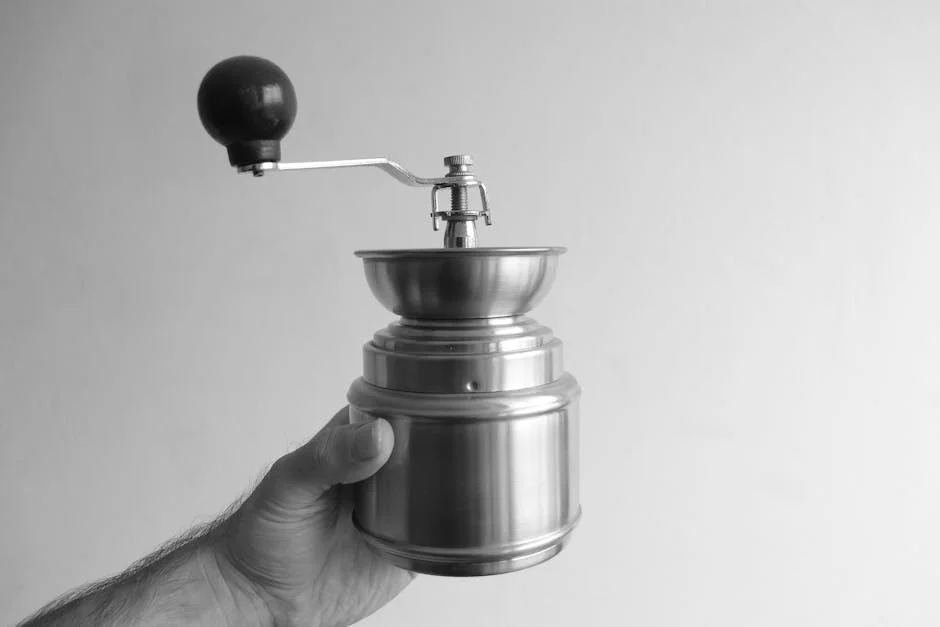
If budget is the constraint, a manual burr grinder is a serious option. The grind quality is comparable to entry-level electric burr grinders, the cost is lower, and the mechanism is durable. The tradeoff is time and physical effort, which matters at scale but is negligible for one or two cups.
Hopper-Fed vs. Single-Dose
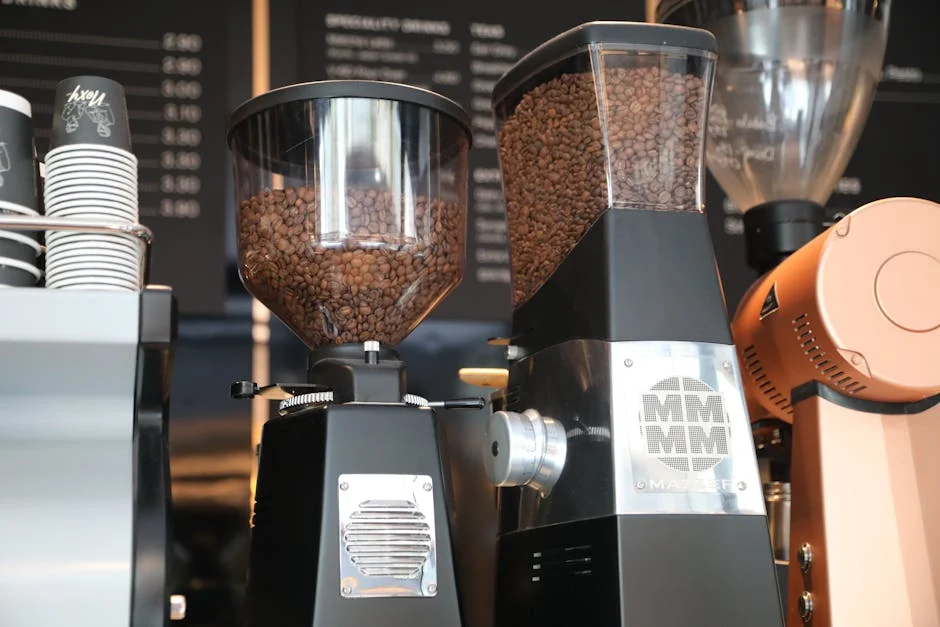
Hopper-fed grinders hold a supply of beans and meter out each dose by weight or time. They’re efficient for a fixed daily routine, one bean, one setting, every morning. Single-dose grinders accept only what you pour in for each session, eliminating retention and making it practical to switch beans or settings between doses without waste or contamination.
The coffee grinder category spans both designs at every price point. Single-dose is the better workflow for anyone rotating through multiple bags or dialling in espresso seriously. Hopper-fed is faster and more convenient for the user whose routine doesn’t change. Neither is categorically superior; the right answer is the one that matches how you actually use the machine.
Grinder Longevity and Serviceability
Baratza’s particular advantage in this space is not just build quality, it’s repairability. They sell replacement parts directly and publish service guides. A Virtuoso+ that develops a fault five years in is fixable; many budget grinders of comparable age are not, and the economics of repair vs. replace tip toward replacement immediately.
If you’re making a purchase intended to last a decade of daily use, factor serviceability into the decision. Grinders with proprietary parts, sealed motors, or no manufacturer support for repairs have a shorter effective lifespan regardless of initial build quality.
Cleaning Frequency
Ground coffee produces oils. Those oils coat burrs, channels, and collection chambers, and they go stale faster than whole beans. A grinder that isn’t cleaned regularly produces coffee that tastes of previous sessions. For daily use, a monthly burr brush and occasional rice-grind cycle (or dedicated grinder cleaning tablets) is realistic maintenance. Grinders with removable burr assemblies are easier to clean thoroughly than sealed units.
Frequently Asked Questions
Is the Baratza Virtuoso+ actually worth it over a blade grinder?
Yes, and the gap is larger than the price difference suggests. A blade grinder produces an inconsistent mix of particle sizes that makes even extraction impossible, regardless of how carefully you grind. The Baratza Virtuoso+ uses calibrated steel burrs that produce uniform particles across 40 settings. The difference is audible in the cup, cleaner flavor, more repeatable results, from the first use.
Can I use the BLACK+DECKER One Touch for espresso?
Not reliably. Espresso requires a fine, uniform grind that blade grinders cannot produce consistently. The BLACK+DECKER One Touch chops beans into particles of varying sizes, which leads to uneven extraction, simultaneously bitter from over-extracted fines and thin from under-extracted coarse fragments. For occasional drip coffee where precision isn’t the priority, it functions.
What does grind retention actually mean, and why does it matter?
Retention is the amount of ground coffee that remains inside the grinder after each dose, stuck in the burr chamber, chute, or exit path rather than reaching your cup. For users grinding the same bean at a fixed setting every day, it’s a minor inconvenience. For anyone switching between coffees or settings frequently, retained grounds from the previous session contaminate the next dose with stale, off-setting coffee. The Baratza Virtuoso+ has moderate retention, acceptable for a dedicated daily setup, less ideal for frequent switching.
Is a blade grinder acceptable if I only make drip coffee?
It’s functional, not ideal. For automatic drip brewing, which is relatively tolerant of grind inconsistency compared to espresso or pour-over, a blade grinder produces a drinkable cup. The KitchenAid BCG111ER and BLACK+DECKER One Touch both work in this context. If you later move to pour-over or decide to try espresso, the grinder becomes the first thing to replace.
How often should I clean my coffee grinder?
For daily use, a light brush-out of the burr chamber and collection bin every two to four weeks is a reasonable baseline. Coffee oils accumulate on burrs and go rancid, affecting flavor noticeably over time. Burr grinders, including the Baratza Virtuoso+, benefit from occasional deeper cleaning with a burr brush or grinder cleaning tablets. Blade grinders like the KitchenAid and BLACK+DECKER models are simpler to wipe out but accumulate oils in crevices that are difficult to reach.
Frequently Asked Questions
Is the Baratza Virtuoso+ actually worth buying over a blade grinder like the KitchenAid?
Yes, and the gap is larger than the price difference suggests. A blade grinder produces an inconsistent mix of particle sizes that makes even extraction impossible regardless of how carefully you grind. The Baratza Virtuoso+ uses calibrated steel burrs that produce uniform particles across 40 settings. The difference shows up in the cup from the first use — cleaner flavor, more repeatable results — and compounds over years of daily brewing.
Can I use the BLACK+DECKER One Touch blade grinder for espresso?
Not reliably. Espresso requires a fine, uniform grind that blade grinders cannot produce consistently. The BLACK+DECKER chops beans into particles of varying sizes, which leads to uneven extraction — simultaneously bitter from over-extracted fines and thin from under-extracted coarse fragments. For occasional drip coffee where precision is not the priority, it functions. For espresso, a burr grinder is not optional.
What is grind retention, and does it matter for home brewing?
Retention is the amount of ground coffee that stays inside the grinder after each dose — stuck in the burr chamber, chute, or exit path rather than reaching your cup. For users grinding the same bean at a fixed setting daily, it is a minor inconvenience. For anyone switching between coffees or settings frequently, retained grounds from the previous session contaminate the next dose with stale, off-setting coffee. The Baratza Virtuoso+ has moderate retention — acceptable for a dedicated daily setup, less ideal for frequent switching.
Is a blade grinder acceptable if I only brew drip coffee and never espresso?
It is functional, not ideal. Automatic drip brewing is relatively tolerant of grind inconsistency compared to espresso or pour over, so a blade grinder produces a drinkable cup. The KitchenAid and BLACK+DECKER both work in this context. If you later move to pour over or decide to try espresso, the grinder becomes the first thing to replace — which is why buying an entry-level burr grinder from the start is the more durable decision.
Does the Baratza Virtuoso+ work across all brew methods, or is it just for espresso?
The Virtuoso+ covers the full range from Turkish-fine to French press coarse across its 40 stepped settings. It is a hopper-fed machine designed for a consistent daily dose rather than single-dosing with frequent bean changes, but it handles drip, pour over, French press, and AeroPress well. The stepped increments are well-calibrated and the return-to-setting reliability is excellent — you can grind for drip in the morning and return to that setting reliably.
Where to Buy
KitchenAid BCG111ER Blade Coffee Grinder, 4 oz, Empire RedSee KitchenAid BCG111ER Blade Coffee Grin… on Amazon