Chemex Coffeemaker Buyer's Guide: Size and Capacity

Affiliate disclosure: Some links on this page are affiliate links. If you buy through them we earn a small commission at no extra cost to you. Recommendations are research-driven; we don't claim personal use of every product reviewed. Product prices and availability are accurate as of the date published and are subject to change. Always check Amazon for current pricing before purchasing. Learn more.

Quick Picks
Chemex Pour-Over Glass Coffeemaker - Classic Series - 3-Cup - Exclusive Packaging
Glass construction offers visual appeal and brew clarity
Buy on Amazon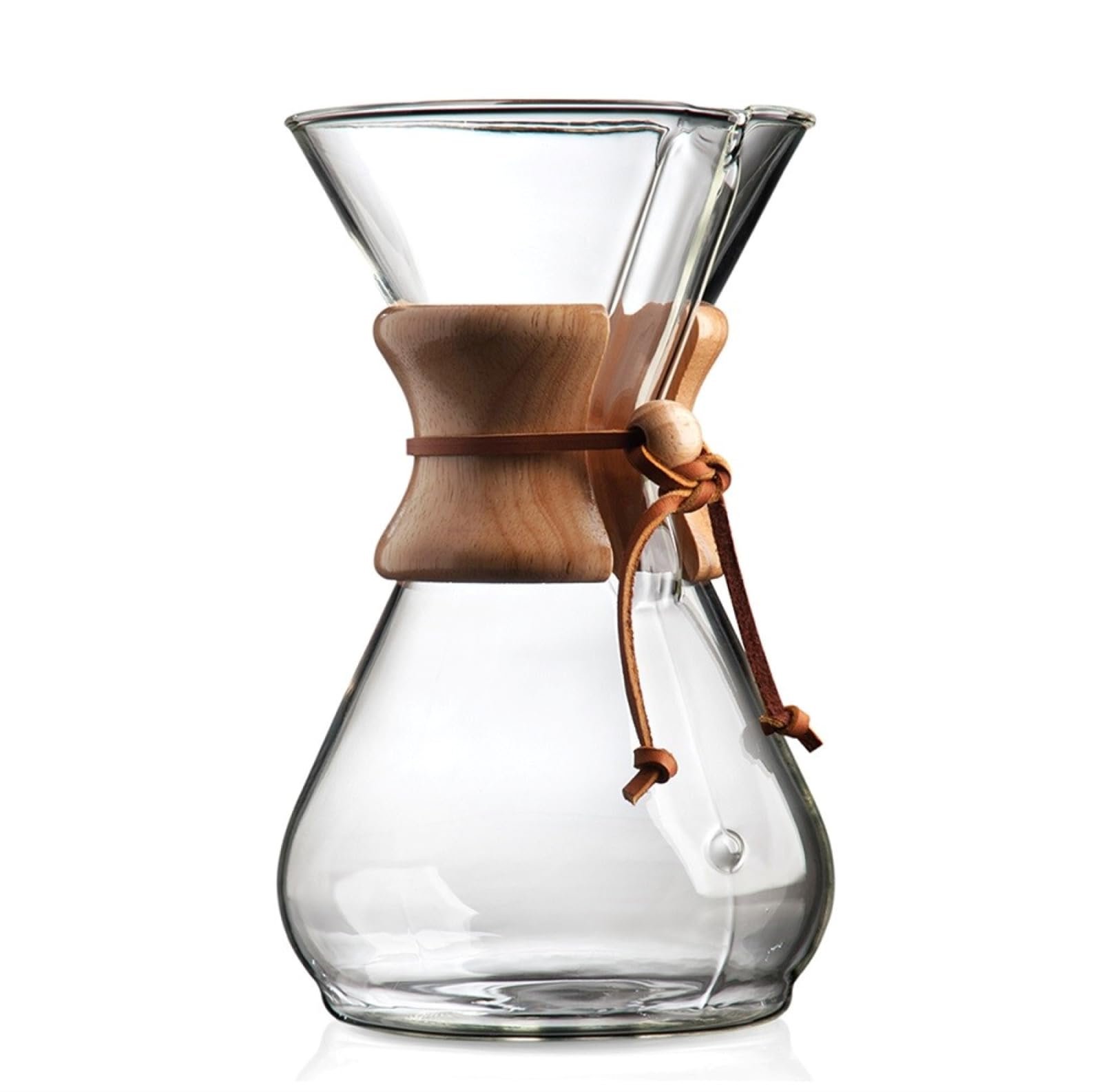
Chemex Pour-Over Glass Coffeemaker - Classic Series - 10-Cup - Exclusive Packaging
Classic glass construction offers aesthetic appeal and brew visibility
Buy on Amazon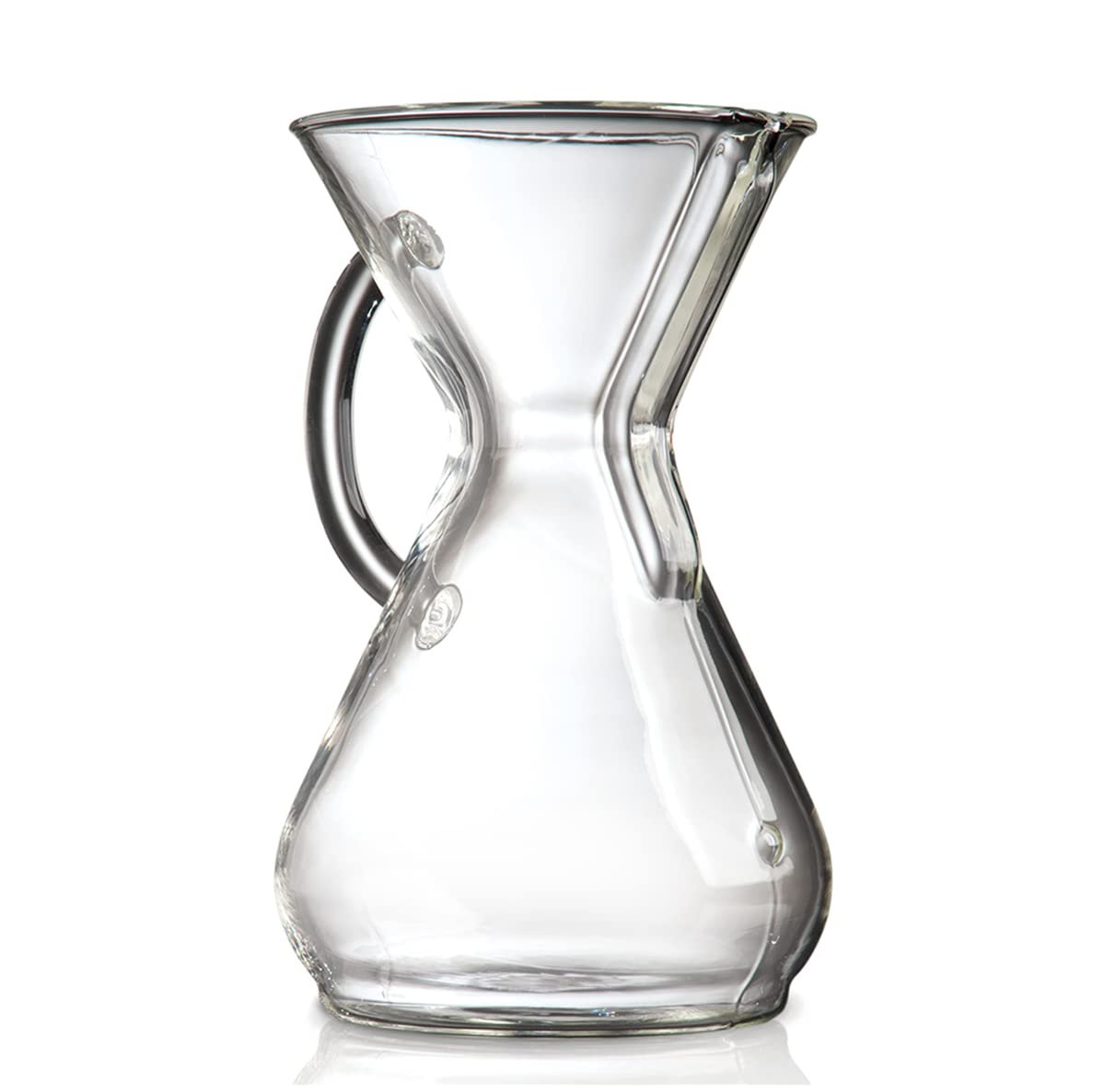
Chemex Pour-Over Glass Coffeemaker - Glass Handle Series - 8-Cup - Exclusive Packaging
Glass construction provides chemical-free brewing and visual clarity
Buy on Amazon| Product | Price Range | Top Strength | Key Weakness | Buy |
|---|---|---|---|---|
| Chemex Pour-Over Glass Coffeemaker - Classic Series - 3-Cup - Exclusive Packaging best overall | Glass construction offers visual appeal and brew clarity | Manual pour-over requires consistent technique and attention | Buy on Amazon | |
| Chemex Pour-Over Glass Coffeemaker - Classic Series - 10-Cup - Exclusive Packaging also consider | Classic glass construction offers aesthetic appeal and brew visibility | Manual pour-over method requires consistent technique and attention | Buy on Amazon | |
| Chemex Pour-Over Glass Coffeemaker - Glass Handle Series - 8-Cup - Exclusive Packaging also consider | Glass construction provides chemical-free brewing and visual clarity | Manual pour-over method requires consistent technique and attention | Buy on Amazon |
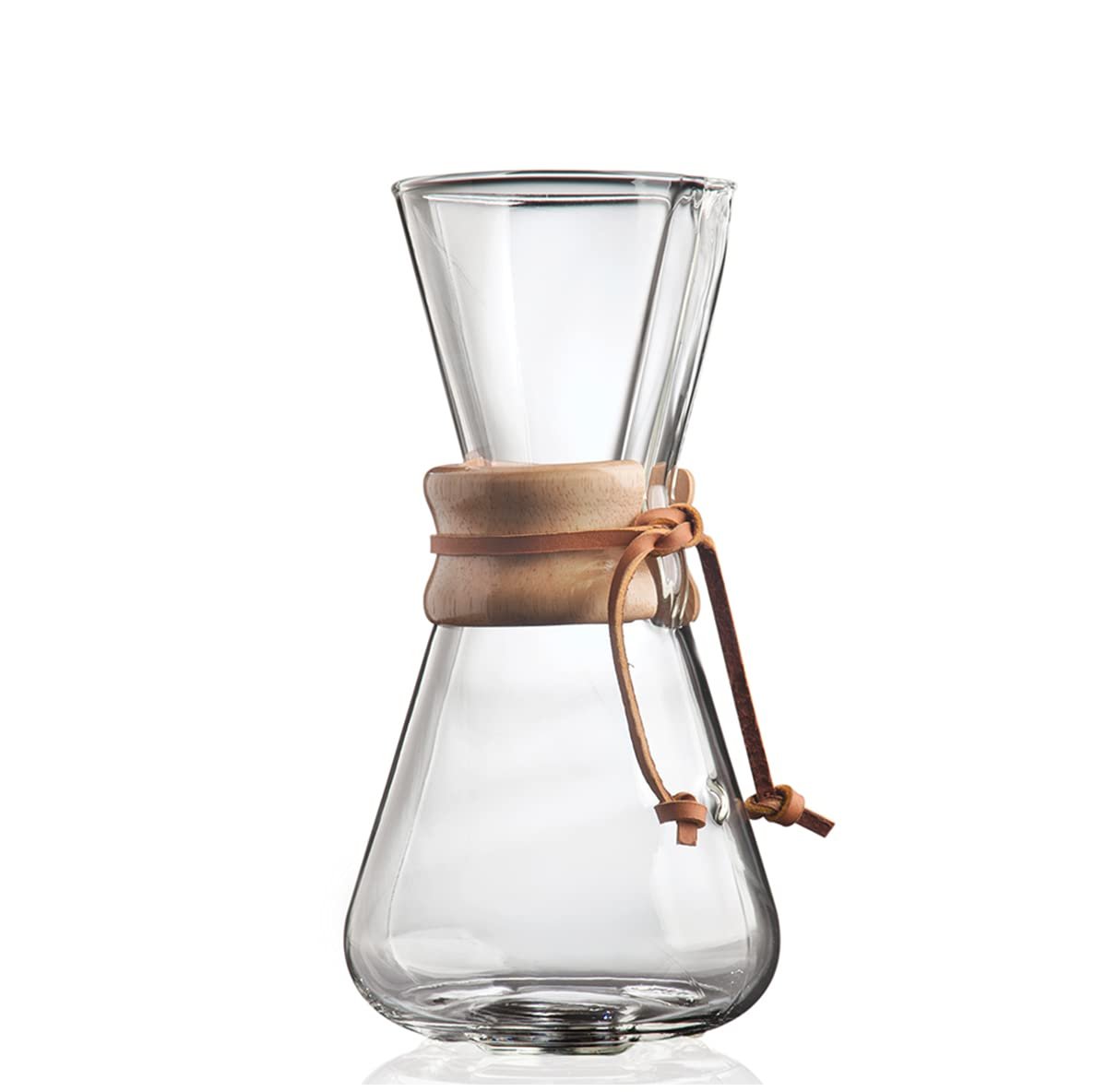
Chemex coffeemakers have occupied the same design since 1941, an hourglass flask, a wooden collar, a leather tie, and a filter that does most of the work. If you’re considering your first Brewing Methods foray beyond a drip machine, or upgrading a pour-over setup, the question isn’t whether Chemex produces excellent coffee. It does. The real question is which size fits your actual routine.
Three products. One brand. The decision is almost entirely about capacity.
What to Look For in a Chemex Coffeemaker
Capacity and Daily Habit
The number on the box, 3-cup, 8-cup, 10-cup, refers to five-ounce servings by Chemex’s measurement, not standard twelve-ounce mugs. A 3-cup Chemex produces roughly fifteen ounces of brewed coffee, which fills a single large mug. An 8-cup produces forty ounces, and the 10-cup tops out around fifty. If you’re buying for yourself and brewing a single generous serving each morning, those numbers map differently than they do for a household of three.
The honest advice: most solo brewers underestimate how much they drink and end up wanting the next size up within a few months. If you’re already making two rounds of pour-over in the morning, start with the 8-cup.
Brewing Technique Compatibility
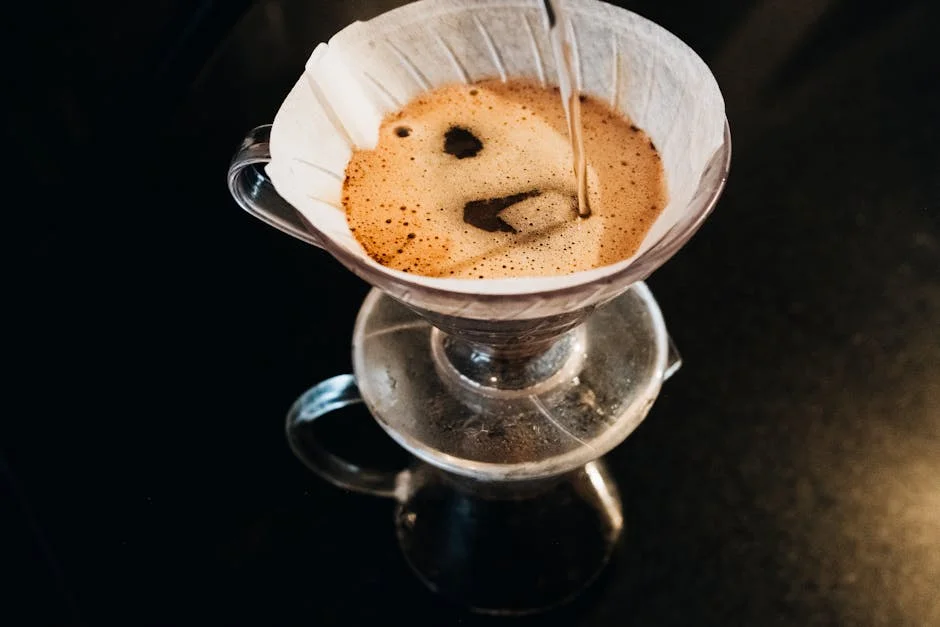
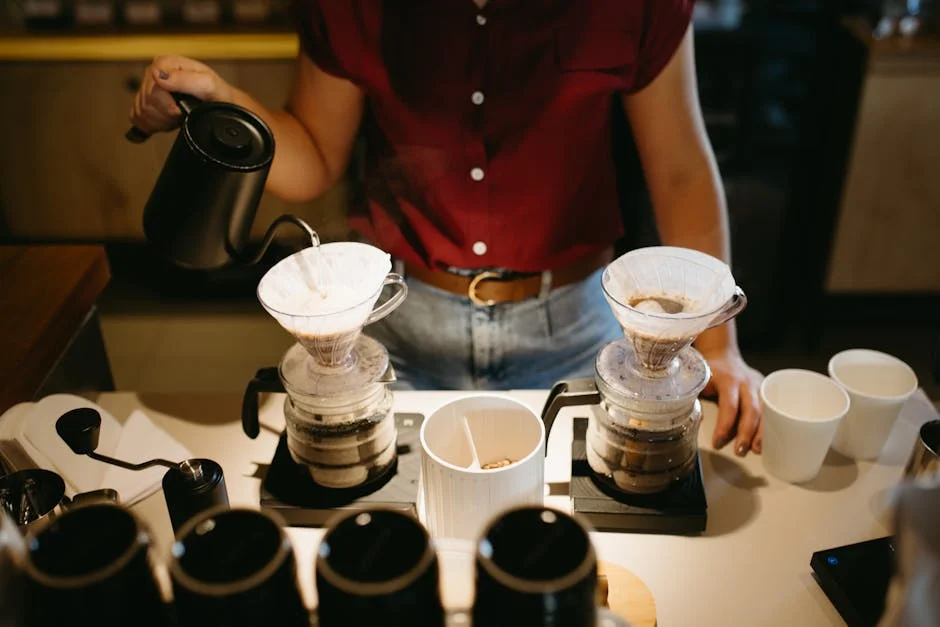
Pour-over on a Chemex is not complicated. Grind size, water temperature, and pour rate are the only variables, and all three can be dialed in within a week of daily practice. The mythology around manual brewing overstates the difficulty. A gooseneck kettle and a kitchen scale are the practical requirements. The Chemex does the rest through its thick, bonded paper filters, which strip fines and oils in a way that standard drip filters don’t.
That said, this is an active brew method. You’re standing at the kettle for four to five minutes. If your morning has no margin, an automatic brewer may serve you better. If you have five minutes and want a cup that tastes noticeably cleaner than anything a drip machine produces, the Chemex is an easy argument.
Handle Design and Heat Management
Two handle approaches exist in the Chemex line. The classic series uses a wooden collar with a leather tie cinched around the waist of the flask, functional, holds well, but the wood can get wet and eventually discolor with heavy use. The Glass Handle Series replaces the wooden collar with a borosilicate glass handle integrated into the body of the carafe. It pours cleanly, doesn’t absorb moisture, and looks cleaner on a counter. The trade-off: the glass handle conducts heat, and on a longer brew or when the flask is fully loaded, you’ll want a cloth between your hand and the handle.
Neither design is fragile by glass standards, but both are glass. A hard knock against a stone counter ends the conversation.
Filter Compatibility
Chemex uses its own square-fold bonded filters, which are thicker than standard pour-over filters. These are not universal, a standard V60 or Kalita filter won’t sit correctly in the Chemex cone. The filters are widely available and inexpensive, but they’re a consumable you need to keep stocked. If you’re drawn to reusable metal filters for environmental or cost reasons, third-party stainless options exist for the Chemex but produce a noticeably different cup: more oils, more body, closer in character to a French press. Neither is wrong, but the classic Chemex flavor profile depends on the bonded paper filters.
For a broader look at how filter choice and brewing method interact, the Brewing Methods section covers the comparison in detail.
Top Picks
Chemex Pour-Over Glass Coffeemaker - Classic Series - 3-Cup
The Chemex Pour-Over Glass Coffeemaker - Classic Series - 3-Cup is the right answer for exactly one type of buyer: someone who brews a single serving in the morning, has no interest in brewing for anyone else, and wants the smallest footprint on the counter. The 3-cup sits compact, brews fast, three cups at Chemex’s measurement means a short brew window, and looks exactly like the larger versions without taking up the same space.
The limitation is real, not theoretical. Brew for a guest and you’re immediately short. Make a second cup for yourself and you’re back at the kettle. If there’s any chance your household expands, or your coffee habit does, this is the size you’ll replace first. I’d only recommend it if the counter space genuinely can’t accommodate the 8-cup, or if small-batch precision is the explicit point.
The glass is the same quality across the line. The wooden collar and leather tie on the classic series hold up well over time, though the leather will patina and the wood will show water marks if you don’t dry it. That’s cosmetic, not structural.
Check current price on Amazon.
Chemex Pour-Over Glass Coffeemaker - Classic Series - 10-Cup
The Chemex Pour-Over Glass Coffeemaker - Classic Series - 10-Cup is the right choice for households of three or four, for anyone who batch-brews in the morning and wants coffee waiting through the first hour of the day, or for the person who hosts regularly and wants pour-over quality at volume. Fifty ounces of brewed coffee covers a table of four without a second brew.
The practical consideration with the 10-cup is brew time. More coffee in the vessel means more grounds, more water, and a longer pour. You’re looking at seven to nine minutes of active brewing for a full batch, versus four to five for smaller volumes. That’s not a deterrent, it’s just the reality of the method. The payoff is a large quantity of exceptionally clean coffee, held at temperature in a sealed flask.
The wooden collar design scales well to this size. The flask is heavier when full, closer to two and a half pounds of liquid, so the collar gives a more secure grip than you’d get on bare glass. If you’re choosing between the 10-cup Classic and the 8-cup Glass Handle at similar capacity, the collar and tie on the 10-cup offer a more confident hold when the vessel is loaded.
Check current price on Amazon.
Chemex Pour-Over Glass Coffeemaker - Glass Handle Series - 8-Cup
Most people buying a Chemex for a household of two, or a solo brewer who makes two cups and wants some margin, should end up here. The Chemex Pour-Over Glass Coffeemaker - Glass Handle Series - 8-Cup hits the practical middle: enough capacity for two to three full mugs without the extended brew time of the 10-cup, and a glass handle that’s easier to maintain than the wooden collar.
The handle design is the differentiator. It’s fully integrated into the glass body, which means no wood to dry, no leather to condition, and no tie to re-cinch. Aesthetically it’s cleaner, more modern, less heritage-craft, and for daily use it’s more practical. The heat conduction note in the specs is real: on a full 8-cup brew, the handle warms noticeably. Worth knowing, not worth avoiding.
For most buyers, the 8-cup Glass Handle is where the capacity-to-effort ratio makes the most sense. It’s not the most dramatic or the most portable option in the line, but it’s the one most people reach for without second-guessing.
Check current price on Amazon.
Buying Guide
How Many Cups Do You Actually Drink?
The first question to answer honestly. Chemex’s cup measurement is five ounces, meaningfully smaller than a standard mug. The 3-cup brews roughly fifteen ounces, which is one large mug. The 8-cup brews forty ounces, which is two to three standard mugs. The 10-cup tops out around fifty ounces.
Count the people in your household who drink coffee in the morning. Multiply by the actual volume they drink, not a five-ounce serving, but a twelve-ounce mug. That number tells you the floor for your capacity choice. Most buyers underestimate and should size up.
Pour-Over or Drip Machine: Making the Switch
The case for switching is straightforward. Chemex produces a cup of coffee that’s noticeably cleaner and more nuanced than most automatic drip machines at any price point. The bonded paper filter eliminates fines and oils that accumulate in standard drip baskets. The result is a cup with more clarity, you taste the coffee’s character rather than the residue of it.
The trade-off is hands-on time. Four to five minutes at the kettle is not a burden if you have the margin. It becomes one if the morning is already compressed. The different Brewing Methods available for pour-over suggest this is a genuine lifestyle question, not a quality question. The quality of a Chemex brew is not contested.
Wood Collar vs Glass Handle
Classic series models use a wooden collar with leather tie. Glass Handle series models use a borosilicate glass handle integrated into the body. Both hold the flask securely. The practical differences: the wooden collar absorbs moisture and will show wear over time, refinishable, but requires attention. The glass handle doesn’t absorb anything, cleans with the carafe, and is one fewer maintenance consideration.
For high-frequency daily use, the glass handle is more practical. For the aesthetic, and it’s a genuine aesthetic, the wooden collar and leather tie look deliberate and considered, the classic series earns its place on a counter.
Cleaning and Long-Term Care
Chemex carafes are dishwasher-safe in principle, though the wooden collar models should have the collar removed before washing. Long-term coffee oils will build up on the glass regardless of method, a bottle brush and a small amount of baking soda removes them without residue.
The filters are single-use. Keep a box stocked. Running out mid-morning is the most common Chemex complaint and has nothing to do with the product. The filters are available in most grocery stores and widely online, stock them the same way you stock coffee.
Grind Size Matters More Than Anything Else
The single most common reason a Chemex produces a flat or over-extracted cup is a grind that’s too fine. Chemex brewing requires a medium-coarse grind, coarser than drip, finer than French press. A burr grinder is the practical requirement. Blade grinders produce inconsistent particle sizes that extract unevenly and clog the thick paper filter.
If you’re upgrading to a Chemex from a drip machine and still using pre-ground supermarket coffee, you’ll get a better result, the filter alone improves clarity. But the full benefit of the Chemex comes through with freshly ground coffee at the right coarseness.
Frequently Asked Questions
What size Chemex should I buy for one person?
The 3-cup is technically correct for a single serving, but most solo coffee drinkers find it limiting within a few weeks. The 8-cup Glass Handle gives you room to make two full mugs without a second brew and doesn’t take up much more counter space. Unless you’re genuinely constrained to a small counter, the 8-cup is the more practical choice for a solo brewer who wants flexibility.
Is the Chemex hard to use if I’ve never done pour-over before?
It’s simpler than its reputation suggests. You need a kettle, a scale, and ground coffee, and the technique settles into habit within a week. The variables are grind size, water temperature (around 200°F), and a slow, steady pour. The thick Chemex filters do more work than standard drip baskets, so even an imprecise first brew produces a clean cup.
What’s the difference between the Classic Series and the Glass Handle Series?
The Classic Series uses a wooden collar and leather tie around the waist of the flask for grip and heat insulation. The Glass Handle Series replaces this with a borosilicate glass handle integrated into the body. Both produce identical coffee. The practical difference is maintenance: the wood collar absorbs moisture and shows wear over time, while the glass handle cleans with the carafe and requires no separate care.
Can I use regular paper filters in a Chemex?
Chemex requires its own square-fold bonded filters, which are thicker than standard V60 or basket filters. Standard filters won’t seat correctly in the Chemex cone and will either collapse or allow grounds through. Chemex filters are widely available, most grocery stores stock them. Third-party metal filters exist and work, but they produce a noticeably different cup: more body, more oils, closer in character to French press than the clean Chemex brew most buyers are after.
Is the 10-cup Chemex worth it if I only drink two cups a day?
Probably not. The 10-cup is designed for batch brewing and households of three or more. For two people who each drink a mug, the 8-cup Glass Handle covers the volume without requiring a nine-minute brew cycle and a carafe that’s mostly empty on the counter. Oversizing creates an incentive to brew more coffee than you’ll drink, which means stale coffee sitting in the flask.
Frequently Asked Questions
What size Chemex should I buy for one person?
The 3-cup is technically correct for a single serving but most solo drinkers find it limiting within a few weeks. The 8-cup Glass Handle gives you room for two full mugs without a second brew and doesn't take up meaningfully more counter space. Unless you're genuinely constrained for space, the 8-cup is the more practical choice for a solo brewer who wants any flexibility.
Classic Series wooden collar vs Glass Handle Series — which is more practical?
For daily use over years, the Glass Handle is more practical. It cleans with the carafe, doesn't absorb moisture, requires no separate care, and the glass construction feels clean and modern. The wooden collar and leather tie on the Classic Series look deliberate and considered — they're a genuine aesthetic, not just decoration — but the wood marks with water and the leather needs occasional conditioning. Buy Classic for the look, Glass Handle for the routine.
Is a Chemex actually hard to use if I've never done pour-over?
Simpler than its reputation suggests. You need a gooseneck kettle, a scale, and a burr grinder — the technique itself settles into habit within a week of daily practice. The variables are grind size (medium-coarse), water temperature (around 200F), and a slow, steady pour after a 45-second bloom. The thick bonded filters do more work than standard drip baskets, so even an imperfect first brew produces a clean cup.
Can I use regular paper filters in a Chemex?
No. Chemex requires its own square-fold or round bonded filters, which are substantially thicker than standard V60 or basket filters. Standard filters won't seat correctly in the Chemex cone and will either collapse or allow grounds to bypass them. Chemex filters are widely available at grocery stores and online. Third-party metal filters exist and work, but they produce a fuller-bodied, oilier cup — closer in character to French press than the clean Chemex brew most buyers are after.
10-cup Chemex vs 8-cup — when does the larger size actually make sense?
The 10-cup is designed for batch brewing and households of three or more. For two people who each drink one mug, the 8-cup Glass Handle covers the volume without requiring a nine-minute brew cycle and a mostly-empty carafe on the counter. Oversizing creates an incentive to brew more coffee than you'll drink, which means stale coffee sitting in the flask. Match the vessel to your actual daily volume.
Where to Buy
Chemex Pour-Over Glass Coffeemaker - Classic Series - 3-Cup - Exclusive PackagingSee Chemex Pour-Over Glass Coffeemaker - … on Amazon